Odoo vs QuickBooks: Best Accounting Software for UAE Businesses
For companies operating in the UAE, choosing the right accounting software is more than a convenience—it’s a critical business decision that impacts VAT compliance, operational efficiency, and overall growth. With UAE VAT regulations enforced by the Federal Tax Authority (FTA) and the growing need for multi-branch, multi-currency operations, businesses must select a solution that ensures accuracy, integration, and scalability.
In this comparison, we explore Odoo vs QuickBooks for UAE businesses, highlighting features, advantages, and limitations to help companies make an informed choice.
Many UAE businesses turn to APPSGATE, a trusted Odoo partner, to implement Odoo efficiently. With deep expertise in UAE VAT compliance, multi-warehouse management, and ERP integration, APPSGATE ensures businesses get a tailored solution that maximizes ROI and maintains regulatory compliance.
Why Accounting Software Choice Matters in the UAE
UAE businesses operate in a fast-paced, competitive environment, dealing with:
- International suppliers and multi-currency transactions
- FTA-compliant VAT reporting
- Multi-branch operations across Dubai, Abu Dhabi, Sharjah, or the wider GCC
- Integration needs across finance, sales, HR, and inventory
Choosing the wrong accounting system can result in:
- Manual errors in VAT calculations
- Delays in financial reporting
- Compliance risks and penalties from the FTA
- Fragmented workflows across finance, sales, and operations
Modern UAE accounting software must provide automation, integration, and real-time insights to streamline financial operations.
Odoo Accounting: An Integrated ERP Solution for UAE Businesses
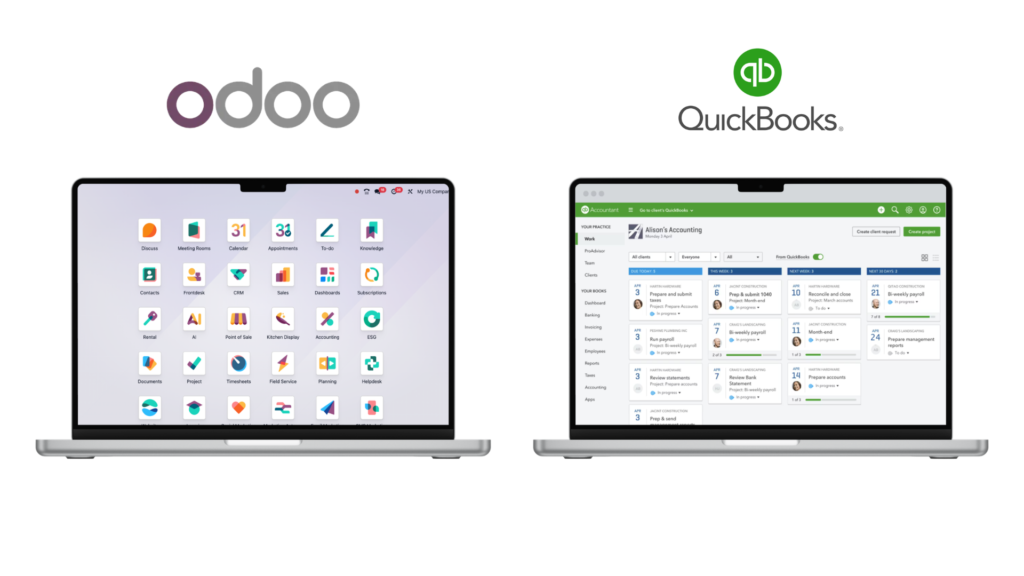
Odoo is more than accounting software—it’s a fully integrated ERP system that combines accounting, sales, inventory, HR, and procurement under a single platform. For UAE businesses, Odoo provides:
1. Full UAE VAT Compliance
Odoo is designed with FTA-ready VAT functionality, including:
- Automated VAT calculations for sales and purchases
- VAT-compliant invoicing templates
- Audit-ready reports for FTA submissions
This ensures UAE companies remain compliant without manual intervention and simplifies tax reporting for finance teams.
2. Multi-Currency & Multi-Branch Support
Many UAE companies operate across multiple branches and trade in AED, USD, EUR, or SAR. Odoo enables:
- Multi-currency transactions with real-time conversion
- Multi-branch accounting consolidation
- Real-time financial visibility across all locations
This capability is critical for companies operating in Dubai, Abu Dhabi, or across the GCC.
3. Real-Time Dashboards & Analytics
Odoo provides instant insights through customizable dashboards, tracking:
- Cash flow and accounts receivable/payable
- Profit & loss, balance sheets, and VAT reports
- Performance metrics for departments and branches
Finance teams can make faster, informed decisions with comprehensive visibility.
4. Seamless Integration Across Business Functions
Odoo connects accounting with all core business functions:
- Sales & CRM: Automatic invoicing and revenue recognition
- Inventory & Procurement: Cost tracking, stock valuation, and automated replenishment
- HR & Payroll: Salary computation linked to attendance and leave management
This integration eliminates manual work, reduces errors, and provides a 360-degree view of the business.
QuickBooks: Simple but Limited for UAE Operations
QuickBooks is widely recognized for its user-friendly interface, making it popular for small businesses. Key strengths include:
- Easy-to-use accounting for beginners
- Basic invoicing and expense tracking
- Simple reports for profit and loss, balance sheets, and cash flow
However, QuickBooks presents limitations for UAE businesses:
- Limited integration with ERP systems, inventory, and HR
- Multi-branch operations are not fully supported
- Advanced VAT compliance may require add-ons or manual adjustments
- Less flexibility for growing enterprises needing custom workflows
While QuickBooks is suitable for very small companies, larger UAE businesses often face scalability and compliance challenges.
Odoo vs QuickBooks
Side-by-Side Comparison: Odoo vs QuickBooks
| Feature / Factor | Odoo Accounting UAE | QuickBooks UAE |
| VAT Compliance | Built-in FTA-ready VAT reporting | Manual setup or add-ons required |
| ERP Integration | Native integration with sales, inventory, HR | Limited, standalone tool |
| Multi-Currency & Multi-Branch | Full UAE & GCC support | Basic multi-currency; limited branch support |
| Customization & Scalability | High; modular ERP structure | Low; better for very small businesses |
| Automation | Automated invoicing, reconciliations, stock tracking | Limited; many tasks are manual |
| Analytics & Dashboards | Real-time, customizable dashboards | Standard reports; less flexibility |
| Cost Efficiency | Modular pricing; scales with growth | Lower entry cost but add-ons increase expenses |
From this comparison, Odoo emerges as a comprehensive accounting solution for UAE businesses, while QuickBooks is more suitable for small businesses with minimal integration needs.
Benefits of Odoo Accounting for UAE Companies
Implementing Odoo Accounting with APPSGATE as your local partner offers UAE businesses:
- Compliance Assurance: Built-in VAT calculations reduce FTA penalties
- Operational Efficiency: Integrated workflows connect accounting with sales, inventory, and HR
- Real-Time Visibility: Instant insights into cash flow, costs, and profitability
- Scalability: Modular design supports SMEs growing into multi-branch, multi-warehouse operations
- Error Reduction: Automation eliminates manual calculations and reconciliations
- Better Decision-Making: Advanced analytics and dashboards guide strategic planning
These benefits translate to smooth operations, timely reporting, and improved financial control for UAE businesses.
Choosing the Right Accounting Solution
When selecting software, UAE companies should consider:
- Business Size: QuickBooks is suitable for startups; Odoo scales for SMEs and larger enterprises
- Integration Needs: If ERP integration with sales, inventory, and HR is required, Odoo is the clear choice
- Compliance Requirements: Odoo offers built-in FTA compliance, while QuickBooks may need workarounds
- Growth Plans: Odoo’s modular approach allows seamless addition of modules as business expands
For UAE companies aiming for automation, compliance, and scalability, Odoo Accounting is the smarter choice.
Get Started with Odoo Accounting in the UAE
Accounting in the UAE doesn’t have to be complex, error-prone, or fragmented. With Odoo, finance teams gain an integrated, FTA-compliant system that reduces errors, improves visibility, and connects all business functions under one platform.
Partnering with APPSGATE—the UAE’s trusted Odoo partner—ensures your implementation is tailored, compliant, and optimized for growth.
📊 Looking for UAE-compliant accounting with full ERP integration? Connect with APPSGATE today and choose Odoo for a future-proof finance system.
Odoo vs QuickBooks