

- What Is School Fee Management Software?
- Why UAE Schools Are Rethinking Fee Collection
- 7 Features to Look for in School Fee Management Software
- School Fee Management Software vs Manual Spreadsheets
- How Odoo Supports School Fee Management
- Choosing the Right School Fee Management Software Partner
- Frequently Asked Questions
Running a school in the UAE means juggling admissions, academics, staff, and — perhaps most sensitive of all — parent payments. School fee management software exists to bring structure to that last piece, replacing scattered spreadsheets and manual follow-ups with a single system that tracks who owes what, when it’s due, and how it was paid. For finance teams at growing schools and multi-campus groups, this is no longer a nice-to-have; it’s becoming a baseline expectation from parents, boards, and regulators alike.
This guide walks through what school fee management software actually does, the features worth prioritizing, how it compares to spreadsheet-based processes, and where Odoo fits into the picture for schools across the UAE and wider GCC.
What Is School Fee Management Software?
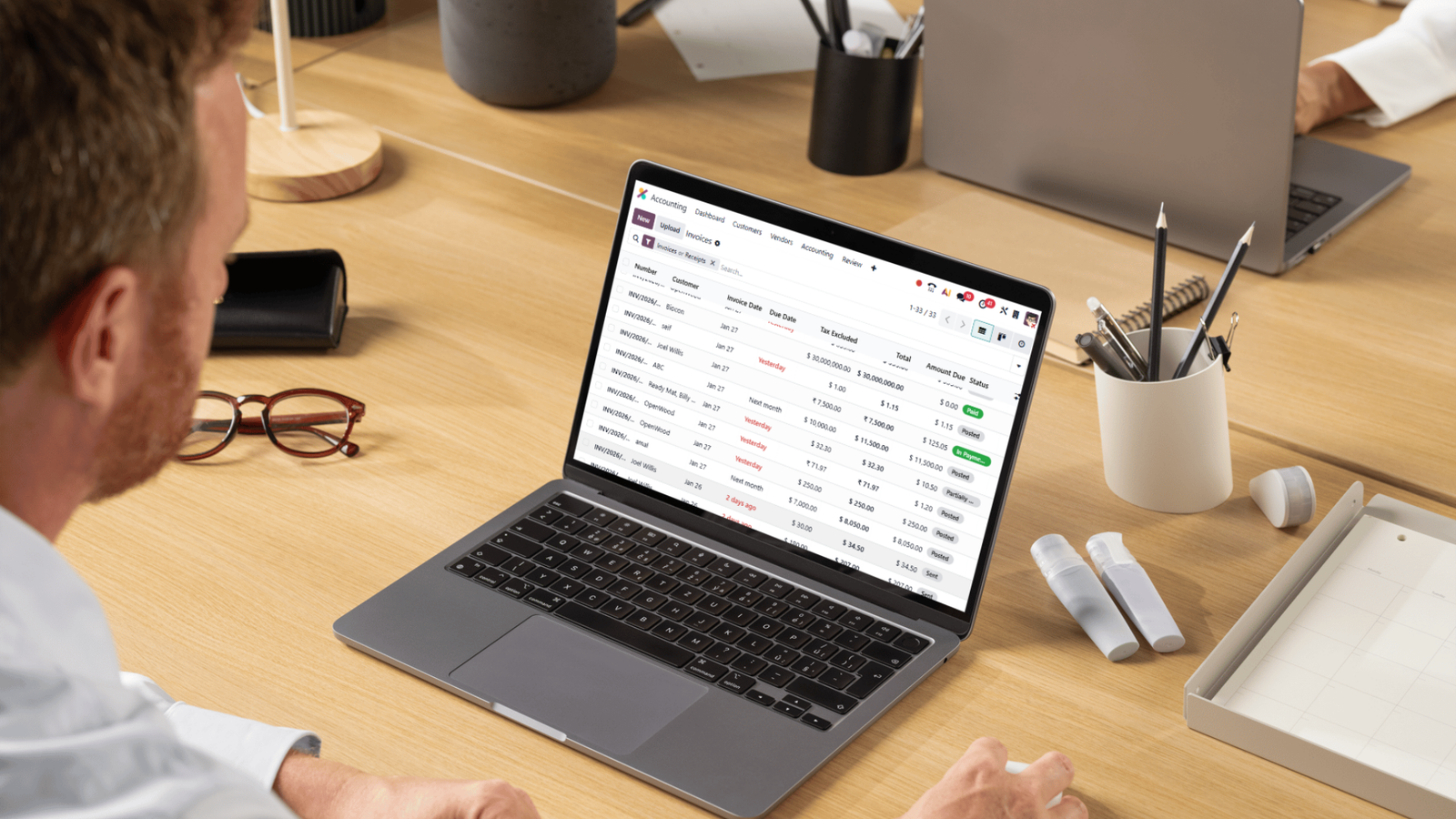
At its core, school fee management software is a digital system that automates the billing, collection, and reconciliation of student fees. Instead of finance staff manually building invoices in spreadsheets and chasing payments by phone or email, the software handles fee structures, due dates, receipts, and reporting from one dashboard.
Most platforms in this category cover a few common jobs:
- Fee structure setup – defining tuition, transport, activity, and other fee categories per grade, term, or student.
- Invoicing and billing – generating and sending invoices automatically based on the academic calendar.
- Payment collection – accepting payments through multiple channels, often including online options.
- Reminders and follow-ups – notifying parents of upcoming or overdue payments.
- Reporting – giving finance teams and school leadership visibility into collections, outstanding balances, and revenue trends.
For schools that also run a broader administrative system, fee management is usually one module within a larger school management software suite rather than a standalone tool, which matters when it comes to keeping student, academic, and financial records in sync.
Why UAE Schools Are Rethinking Fee Collection
The UAE’s private education sector is large, competitive, and closely watched by regulators such as the KHDA in Dubai and ADEK in Abu Dhabi. Parents increasingly expect the same convenience from their child’s school that they get from banking apps or utility providers — clear statements, digital payment options, and timely reminders rather than paper notices sent home in a backpack.
At the same time, schools themselves are under pressure to keep administrative overhead lean. Finance teams handling fee collection manually often deal with:
- Fee structures that change year to year, term to term, or even student to student due to sibling discounts and scholarships.
- Multiple payment methods and currencies, especially in schools serving a broad expatriate parent base.
- The need to produce accurate, audit-ready financial records for school ownership groups and regulators.
Manually reconciling these variables in spreadsheets is possible for a small single-campus school, but it becomes progressively harder to manage cleanly as student numbers, campuses, or fee categories grow. This is the core reason many schools evaluate dedicated school fee management software rather than continuing to extend spreadsheet-based processes.
7 Features to Look for in School Fee Management Software
Not all fee management tools are built the same way. When evaluating options, school leaders and finance teams should look closely at these seven capabilities.
1. Flexible fee structure configuration
The system should let you define different fee categories — tuition, transport, uniforms, activities — and apply them by grade, term, or individual student, including discounts and installment plans.
2. Automated invoicing
Invoices should generate automatically according to the academic calendar, removing the need to manually recreate them every term.
3. Multiple payment options
Parents should be able to pay through the channels they already use, whether that’s bank transfer, card payment, or an online portal, reducing friction and late payments.
4. Automated reminders
Automatic notifications for upcoming and overdue fees help reduce the manual chasing that consumes finance staff time.
5. Real-time reporting and dashboards
Leadership and finance teams need visibility into collections, outstanding balances, and revenue trends without having to manually compile reports.
6. Integration with accounting
Fee data should flow directly into the school’s general ledger and accounting records, avoiding duplicate data entry and reconciliation errors between systems.
7. Multi-campus and multi-currency support
For school groups operating more than one campus, or serving a diverse international parent base, the software should consolidate reporting across locations and currencies.
School Fee Management Software vs Manual Spreadsheets
Many schools start with spreadsheets, and for a very small institution this can work for a while. But spreadsheets were never designed to manage recurring billing, multiple payment channels, and audit-ready reporting at once, and the limitations tend to surface as a school grows.

Spreadsheets typically involve:
- Manual invoice creation for every student, every term.
- Fee reminders sent individually by staff, based on memory or manual tracking.
- Reconciliation done by cross-checking bank statements against a separate ledger.
- Reporting built by hand whenever leadership asks for an update.
Dedicated school fee management software typically offers:
- Invoices generated automatically from predefined fee structures.
- Reminder workflows that trigger without staff intervention.
- Payment records that sync directly with accounting.
- Reports and dashboards available on demand.
The practical difference is less about any single task and more about what happens as complexity increases — more students, more campuses, more fee categories, or more payment methods. Software built for this purpose is designed to absorb that complexity in ways that manual spreadsheet processes were not designed to handle.
How Odoo Supports School Fee Management
APPSGATE implements Odoo-based systems for schools across the UAE and GCC, and fee management is a central part of that work. Odoo is an integrated business platform with modules spanning accounting, invoicing, CRM, and more, and its open architecture allows fee structures, invoicing rules, and payment workflows to be configured to match how a specific school actually operates rather than forcing the school into a rigid template.
Because accounting and invoicing sit within the same Odoo platform, fee transactions can be recorded and reconciled without needing to export and re-import data between separate systems. For school groups managing more than one campus, this also means fee and financial data can be structured to roll up into consolidated views for leadership, rather than living in disconnected files per campus.
Schools interested in a fuller picture of how this fits into broader school operations — admissions, academics, and administration alongside finance — can explore how Odoo for education management brings these functions together in one platform.
Choosing the Right School Fee Management Software Partner
Selecting school fee management software isn’t just a technology decision — it’s also a decision about who implements and supports it. A few questions worth asking any prospective vendor or implementation partner:
- Does the system integrate with our existing accounting setup, or will we still need manual reconciliation?
- Can it handle our specific fee structures, including discounts, installments, and multiple currencies if relevant?
- What does onboarding and training look like for finance staff who will use the system daily?
- Is there local support available in the UAE or wider GCC time zone, rather than relying solely on offshore support desks?
- How is student and payment data secured, and does the vendor have experience with schools specifically, rather than only generic business clients?
A partner with direct experience implementing fee management for schools in the region will typically understand recurring regional realities — multi-currency parent bases, term-based academic calendars, and the reporting expectations of school ownership groups — better than a generic, one-size-fits-all software vendor.
Frequently Asked Questions
Is school fee management software only useful for large schools?
No. Even single-campus schools benefit from automated invoicing and reminders, since these reduce manual admin work regardless of school size. The benefits simply compound further as student numbers and fee complexity grow.
Can school fee management software handle discounts and installment plans?
Good systems are built to support flexible fee structures, including sibling discounts, scholarships, and installment-based payment plans, rather than assuming every student pays a single flat fee on a single date.
Does fee management software replace a school’s accounting system?
Not necessarily — the goal is usually integration rather than replacement. Fee data should flow into the school’s existing accounting records so finance teams aren’t reconciling two separate systems manually.
Is cloud-based school fee management software secure for handling parent payment data?
Reputable platforms are built with data protection as a core requirement, since they handle sensitive financial and personal information. Schools should confirm a vendor’s specific security practices and compliance approach as part of due diligence rather than assuming security by default.
How long does it typically take to implement school fee management software?
Implementation timelines vary significantly based on school size, the number of campuses, and how customized the fee structures need to be, so timelines are best discussed directly with an implementation partner based on a school’s specific requirements.
According to UNESCO’s work on education management, effective administrative systems are widely recognized as playing a supporting role in overall school governance, alongside academic and pedagogical priorities — reinforcing why finance and administrative tooling deserves the same attention schools give to curriculum and staffing decisions.
If your school is still managing fees through spreadsheets and manual follow-ups, it may be time to explore a purpose-built system instead. APPSGATE works with schools across the UAE and GCC to implement Odoo-based fee management alongside broader school administration needs — get in touch to discuss what a tailored setup could look like for your campus.