

Job costing for cleaning companies in the UAE is the single biggest lever between a profitable contract and a quiet loss hiding inside a monthly invoice. Facilities, pest control, and environmental services firms often run dozens of simultaneous jobs across branches, each with its own manpower, equipment, and consumables cost — and without a dedicated system, margins get guessed rather than calculated. This guide walks through the eight features that make job costing for cleaning companies accurate, auditable, and scalable across the GCC.
- Why Job Costing Matters for UAE Cleaning Companies
- Mandatory Site Survey Before Every Quote
- Four-Category Cost Calculation Engine
- Multi-Level Margin Approval Workflows
- Flexible Invoicing and Invoice Splitting
- Mobile Field Tools for Real-Time Job Tracking
- Multi-Company, Multi-Currency, Multi-Language Support
- How APPSGATE Implements Job Costing on Odoo
- Frequently Asked Questions
Why Job Costing Matters for UAE Cleaning Companies
Cleaning, pest control, and environmental services companies in the UAE typically operate on thin, variable margins that shift job to job. A villa deep-clean has a completely different cost structure than a commercial facility contract or an outdoor pest treatment route, yet many firms still price jobs using spreadsheets or gut feel.
Job costing for cleaning companies solves this by breaking every job into its real cost drivers — labor hours, equipment usage, vehicle mileage, and consumables — and comparing that against the quoted price in real time. Without this discipline, a company can win volume and still bleed cash on unprofitable branches or service lines.
This is precisely the gap that a purpose-built Odoo-based system like EnviroGate was designed to close for environmental and facility services businesses across the GCC.
Mandatory Site Survey Before Every Quote
The first control point in proper job costing for cleaning companies isn’t in the accounting module — it’s in the sales process itself. A mandatory site survey step is built into the quoting workflow before any formal quotation can be issued to a client.

This means sales teams cannot skip straight from inquiry to proposal. A surveyor must physically assess the site, square footage, access constraints, and service complexity, and that data feeds directly into the cost calculation engine.
- Prevents underpricing based on guesswork or outdated assumptions
- Captures site-specific risk factors (height-access cleaning, hazardous waste handling, after-hours work)
- Creates an auditable record tying every quote back to real site conditions
For firms managing hundreds of recurring contracts, this single workflow gate often prevents the majority of margin erosion before a contract is even signed.
Four-Category Cost Calculation Engine
Once the survey data is in, job costing for cleaning companies needs a calculation engine that reflects how these businesses actually spend money. The system organizes every cost into four categories:
- Manpower — technician and crew hours, shift differentials, and skill-level rates
- Equipment — machinery, specialized tools, and depreciation or rental allocation per job
- Vehicles — fuel, mileage, and maintenance costs apportioned to the specific job or route
- Consumables — chemicals, filters, disposable materials, and other per-job supplies
Rather than lumping all costs into a single “job expense” line, this four-way breakdown lets management see exactly where a contract is profitable and where it isn’t. A branch manager reviewing a loss-making outlet can immediately see whether the issue is overstaffing, excessive vehicle costs, or consumable overuse — rather than starting an open-ended investigation.
This level of granularity is what separates job costing for cleaning companies done properly from a generic expense tracker bolted onto an accounting system.
Multi-Level Margin Approval Workflows
Even with accurate costing data, discounting pressure from sales teams and account managers is a constant reality in competitive UAE markets. To protect margins, the system enforces multi-level margin approval workflows before a quote below a certain threshold can go out the door.
- Sales reps can quote within a pre-set margin band without escalation
- Quotes below the threshold automatically route to a supervisor or regional manager
- Further margin erosion can require sign-off from senior finance or operations leadership
This approval discipline extends beyond quoting into sales orders, purchases, expenses, payments, journal entries, and customer onboarding — meaning the same governance that protects a quote’s margin also protects the business from unauthorized spending or onboarding a client on terms finance hasn’t reviewed.
For multi-branch cleaning and environmental services groups, this turns margin protection from a policy written in a handbook into something the software actually enforces.
Flexible Invoicing and Invoice Splitting
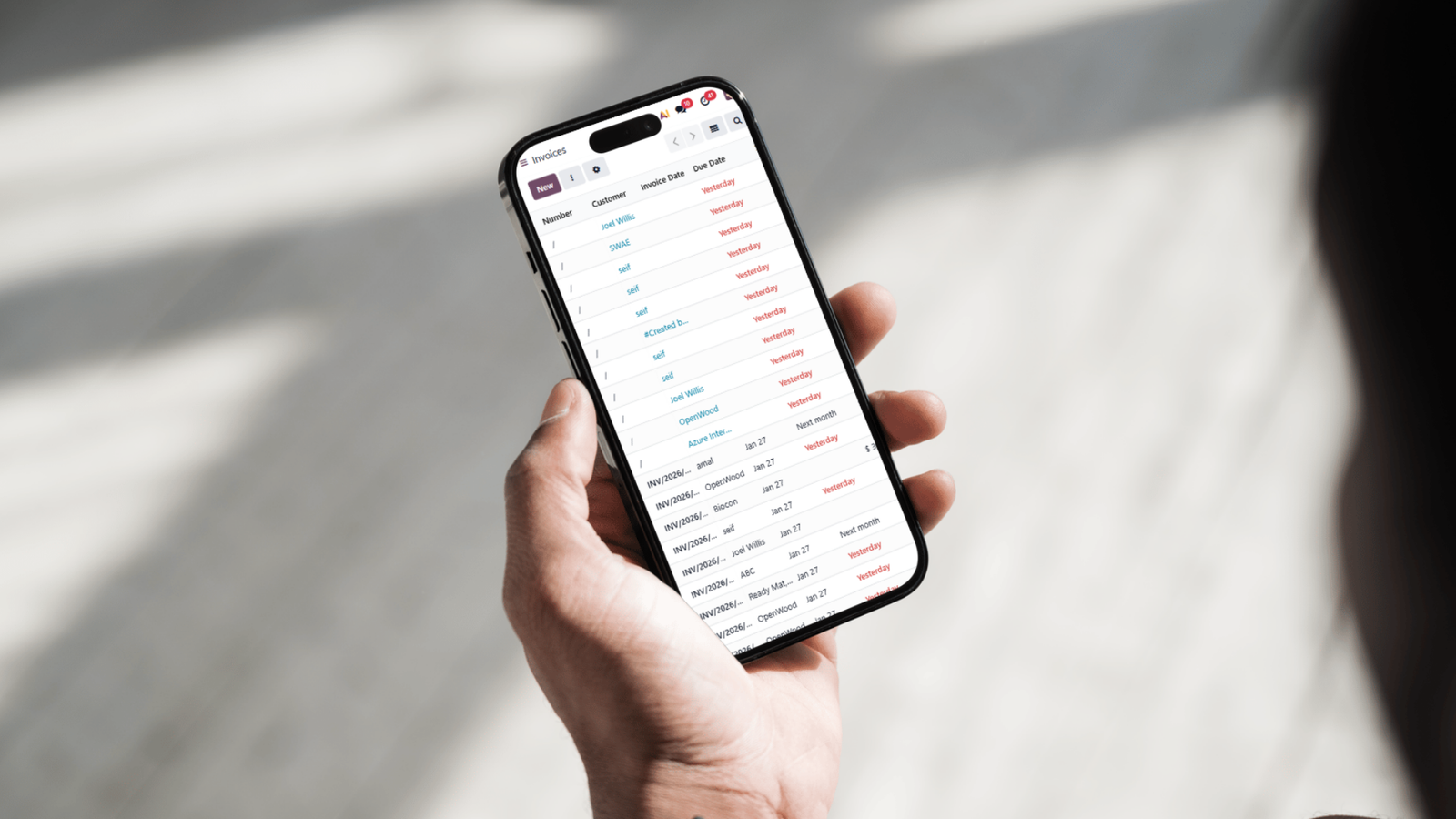
Accurate job costing for cleaning companies is only half the picture if invoicing can’t keep pace with how contracts are actually structured. UAE facilities and environmental services firms often need to invoice by branch, by service line, by region, or by individual outlet — sometimes all within the same client relationship.
- A single client with multiple outlets can receive consolidated or split invoices per location
- Recurring contracts can be invoiced on flexible schedules (monthly, milestone-based, or per completed job)
- Service-line splitting lets a client be billed separately for cleaning versus pest control versus environmental compliance work, even under one master agreement
This flexibility matters enormously for large retail chains, mall operators, and government facility contracts common in the UAE, where a single procurement relationship often spans dozens of physical sites with different budget holders.
Mobile Field Tools for Real-Time Job Tracking
Job costing breaks down quickly if the cost data isn’t captured where the work actually happens — out in the field, not back at a desk. Mobile tools give technicians and supervisors the ability to log job progress, time, and materials used in real time, directly from the field.
- Technicians can check in/out of jobs, capturing actual labor hours against the quoted estimate
- Supervisors can record consumables used on-site rather than relying on end-of-month estimates
- Photos and completion notes can be attached to jobs for quality assurance and client reporting
This real-time capture closes the loop between the costing engine and what’s actually happening on the ground, so the four-category cost breakdown reflects reality rather than a static estimate created weeks earlier at the quoting stage.
Multi-Company, Multi-Currency, Multi-Language Support
Many UAE-based cleaning, pest control, and environmental services groups operate across multiple legal entities, emirates, or even GCC countries — and their systems need to reflect that complexity without creating separate data silos. Built on Odoo, the platform supports multi-company, multi-currency, and multi-language operations natively.
- Consolidated reporting across multiple branches or legal entities without manual spreadsheet merging
- Multi-currency handling for groups with cross-border GCC operations or international suppliers
- Multi-language support for diverse frontline teams and client-facing documentation
This matters directly for job costing accuracy: a group with five legal entities across the UAE and Saudi Arabia needs cost and margin data that rolls up cleanly at the group level while still letting each branch manager see their own job-level detail.
How APPSGATE Implements Job Costing on Odoo
APPSGATE builds this entire job costing framework on top of Odoo ERP, meaning cleaning, pest control, and environmental services companies get a single connected system rather than a patchwork of quoting tools, spreadsheets, and disconnected accounting software.

Because the costing engine, approval workflows, invoicing, and mobile field tools all sit inside one Odoo environment, finance teams get real-time visibility into job-level profitability without reconciling data between systems. This is the same underlying approach APPSGATE uses across its sector-specific builds, including its dedicated environmental services management software for UAE operators.
For context on how structured, auditable cost tracking is increasingly expected across industries, the Chartered Institute of Management Accountants has long emphasized job and activity-based costing as a core discipline for service businesses with variable, multi-site cost structures — a principle directly reflected in how this system is architected.
Firms evaluating a move away from spreadsheets should weigh not just the cost-tracking features themselves, but how well those features integrate with sales, approvals, and invoicing — since job costing that lives in isolation from the rest of the business rarely stays accurate for long.
Frequently Asked Questions
What is job costing for cleaning companies, and why is it different from standard expense tracking?
Job costing for cleaning companies tracks costs against each individual job or contract rather than the business as a whole. A proper job costing engine for cleaning and environmental services calculates manpower, equipment, vehicle, and consumables costs separately for every job, so management can see profitability at the contract level — not just at the end-of-month company level where losses on individual jobs can hide inside an overall profit figure.
Can job costing handle multi-branch or multi-outlet cleaning contracts?
Yes. The system is built specifically for UAE facilities and environmental services firms managing multiple branches, outlets, or regions under a single client relationship. Costs and invoices can be tracked and split by branch, service line, or outlet, while still rolling up into consolidated group-level reporting.
How does the system prevent sales teams from quoting unprofitable jobs?
Through the mandatory site survey requirement and multi-level margin approval workflow. No formal quote can be issued without a completed site survey, and any quote falling below a set margin threshold automatically escalates for supervisor or senior management approval before it can be sent to the client.
Does this integrate with accounting and payroll, or is it a standalone costing tool?
It’s built natively on Odoo ERP, so job costing data flows directly into sales orders, purchasing, expenses, payments, journal entries, and customer onboarding records. This means finance teams aren’t re-entering job cost data into a separate accounting system — it’s the same connected platform.
Is this suitable for companies operating across multiple GCC countries?
Yes. The platform supports multi-company, multi-currency, and multi-language operations, which is essential for UAE-based groups with legal entities or branches operating across Saudi Arabia, Oman, or other GCC markets, where consolidated group reporting needs to coexist with local currency and language requirements.
What’s the first step for a cleaning or environmental services company wanting to improve job costing?
The practical starting point is mapping current costing gaps — most firms discover they’re missing at least one of the four cost categories (manpower, equipment, vehicles, consumables) in their current tracking. From there, APPSGATE can scope a phased Odoo implementation that starts with quoting and costing before extending into full invoic