

- What Is Real Estate Commission Management Software?
- Why Spreadsheets and Generic Tools Fall Short
- 6 Proven Wins from Real Estate Commission Management Software
- Choosing the Right Real Estate Commission Management Software
- How PropertyGate for Brokers Delivers This on Odoo
- FAQs on Real Estate Commission Management Software
Real estate brokerages across the UAE share one recurring headache: commissions. Every deal involves different agents, different split percentages, different payout timing, and different VAT treatment — and when all of that is tracked in spreadsheets or disconnected tools, errors creep in fast. That is exactly why real estate commission management software has become a priority search for brokerage owners and finance managers trying to close their books accurately and pay agents on time. This guide walks through what this type of software actually does, why manual methods break down as a brokerage scales, and the concrete wins a purpose-built solution like PropertyGate for Brokers delivers on the Odoo platform.
What Is Real Estate Commission Management Software?

At its core, real estate commission management software is a system that automates how brokerage commissions are calculated, approved, tracked, and paid out. Instead of a finance team manually recalculating splits in a spreadsheet every time a deal closes, the software applies predefined rules automatically.
Those rules typically account for:
- Agent role — whether someone is the listing agent, the selling agent, or a referral source.
- Total commission amount — the percentage or flat fee agreed with the client.
- Company policy — tiered splits, team overrides, or seniority-based structures.
Because commission structures rarely stay static — brokerages renegotiate splits, add new agent tiers, and adjust referral fees as they grow — software built specifically for real estate commission tracking needs to let a brokerage update these rules centrally rather than re-teaching every spreadsheet formula each time something changes.
Why Spreadsheets and Generic Accounting Tools Fall Short

Spreadsheets feel free and familiar, which is why so many brokerages start there. The problem is they were never designed for the layered logic that real estate commissions require.
A single property transaction in a brokerage can trigger multiple financial events at once: a landlord invoice, a customer invoice, an agent commission payout, and a VAT entry — all tied to the same deal but often requiring different treatment. When these are managed in separate spreadsheets or a generic accounting tool with no real estate logic built in, a few common issues tend to surface:
- Manual recalculation errors when a deal involves multiple agents or a tiered split.
- Delayed payouts because no one is tracking which commissions are due now versus pending a future trigger.
- Reconciliation gaps between what the bank shows and what the ledger says was collected.
- VAT miscalculations on commission income, which can create compliance exposure.
Generic accounting software can record a transaction, but it generally cannot encode “pay this agent only after the deal closes and funds are collected, minus a probation-period deduction if applicable.” That logic is specific to how brokerages actually operate, which is why commission management software for real estate needs to be purpose-built rather than bolted onto a standard bookkeeping tool.
6 Proven Wins from Real Estate Commission Management Software
Brokerages that move from manual tracking to dedicated real estate commission management software typically see improvements across these six areas:
1. Automated commission calculation by role and policy. The system calculates each agent’s share automatically based on their role in the deal (listing, selling, or referral) and the brokerage’s configured commission policy, removing manual recalculation for every transaction.
2. Configurable payout triggers. Instead of a blanket “pay on signing” rule, payouts can be tied to specific milestones — deal closure, actual fund collection, or completion of an agent’s probation period — so the brokerage only disburses commission when its own payment conditions are genuinely met.
3. Dual invoicing handled in one place. A single property transaction often requires both a landlord invoice and a customer invoice. Managing both within the same system, against the same deal record, removes the duplicate data entry and mismatches that happen when these are tracked separately.
4. Integrated agent billing. Commission payouts are generated as structured billing records rather than ad hoc transfers, giving both the brokerage and the agent a clear, auditable record of what was earned, when, and why.
5. Built-in bank reconciliation. Matching what has actually hit the bank account against what the ledger expects to be collected is one of the most time-consuming manual tasks in brokerage finance. Dedicated software reconciles this against the same transaction records used for commission calculation, rather than requiring a separate manual pass.
6. VAT and tax compliance baked into the workflow. Since commission income and property transactions both carry VAT implications in the UAE, software that applies tax rules automatically at the point of invoicing reduces the risk of errors surfacing later during filing or audit.
Together, these wins mean the finance team spends less time chasing numbers across tools and more time confirming that what the software calculated is correct — a meaningfully different, less error-prone workflow than rebuilding the same logic by hand every month.
Choosing the Right Real Estate Commission Management Software
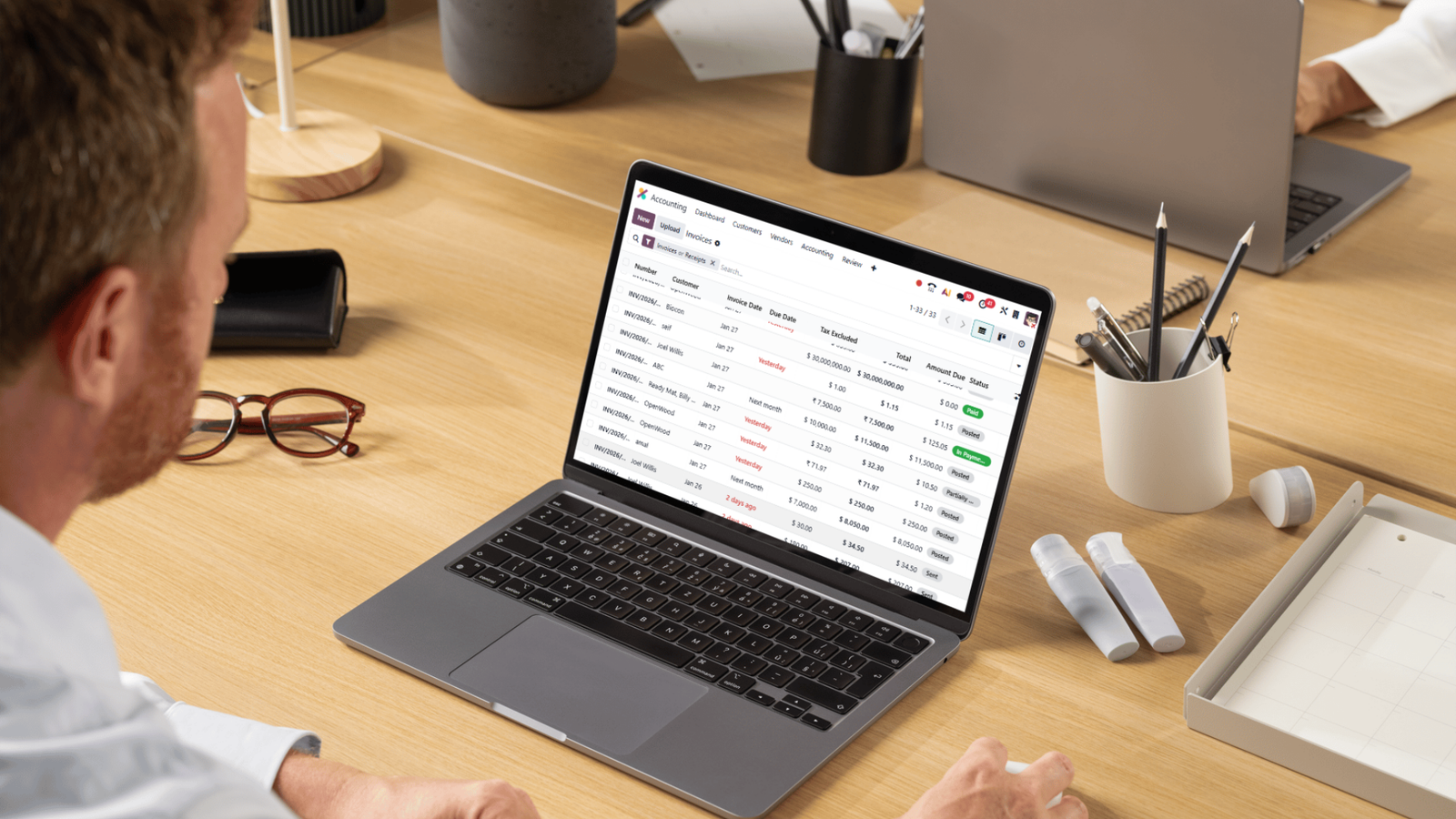
Not every “commission tracker” on the market is built for how UAE brokerages actually transact. When evaluating options, it helps to look past the marketing and check for a few specific capabilities.
Does it handle role-based and tiered splits natively? If a brokerage ever pays a referral fee, a team override, or a different percentage to a listing versus a selling agent, the software needs to support that without requiring custom workarounds for every exception.
Can payout timing be configured, not hardcoded? A brokerage that wants to defer commission until funds are collected — a common and sensible practice — needs that as a configurable rule, not a fixed “pay on invoice” assumption baked into the system.
Is it connected to the brokerage’s core property and transaction records, or sitting on its own? A standalone commission tool that doesn’t share data with property listings, leasing records, or the general ledger simply creates another silo to reconcile manually. The strongest real estate commission management software options sit on the same platform as property listing management, sales performance tracking, and accounting — so a commission calculation and the deal it came from are always the same record, not two things someone has to match up later.
Does it support VAT and standard UAE tax requirements out of the box? Brokerages operating in the UAE need commission and invoicing workflows aligned with Federal Tax Authority requirements; software that treats VAT as an afterthought shifts that compliance risk back onto the finance team.
Can it scale as the brokerage grows? A tool that works for five agents on one set of listings should not need to be replaced the moment the brokerage adds new agents, new commission tiers, or operates across more than one office. Brokerages that expect growth, including those thinking about operating across multiple emirates, generally find it’s worth confirming upfront that a system’s commission rules and reporting can scale with that — this is a practical planning consideration for any growing brokerage rather than a guaranteed outcome of any one tool.
How PropertyGate for Brokers Delivers This on Odoo
APPSGATE built PropertyGate for Brokers specifically to close the gap between what generic accounting tools offer and what real estate brokerages actually need, on top of the Odoo ERP platform.
Because PropertyGate for Brokers runs on Odoo, commission calculations, dual landlord-and-customer invoicing, agent billing, bank reconciliation, and VAT compliance all live inside the same connected system as property listing management and sales performance tracking — not as separate add-ons that need to be reconciled against each other at month-end.
In practice, this means a brokerage’s finance team can configure commission rules once — by agent role, by total deal value, by company-wide policy — and let the system apply those rules consistently across every transaction, every agent, and every emirate the brokerage operates in. Payout triggers can be set to fire at deal closure, at fund collection, or after an agent clears probation, depending on what the brokerage’s own policy requires.
For brokerages that have outgrown spreadsheets but don’t want to adopt a rigid, real-estate-agnostic accounting system, this combination of flexibility and structure is the practical middle ground. You can see how this fits into APPSGATE’s broader real estate software lineup on the Real Estate Brokerage Software UAE page, which covers the full feature set alongside commission management.
FAQs on Real Estate Commission Management Software
Does real estate commission management software replace my accountant?
No. It automates the calculation, tracking, and reconciliation of commissions so your accounting or finance team is working with accurate, pre-calculated figures rather than building those calculations manually. Final review, approvals, and strategic financial decisions still sit with your finance team — the software simply removes the repetitive, error-prone manual work underneath those decisions.
Can the software handle different commission structures for different agents?
Yes, provided it is built for real estate specifically. Role-based splits (listing versus selling agent), tiered structures, and referral fees should all be configurable as policy rules rather than one-off manual adjustments for each deal.
How does VAT get applied to commission income in the UAE?
Commission income is generally subject to UAE VAT like other taxable supplies, and the specific treatment can depend on the nature of the transaction and the parties involved. Brokerages should confirm their exact VAT obligations with the UAE Federal Tax Authority or a qualified tax advisor, while using software that applies configured VAT rules consistently at the point of invoicing to reduce manual error.
What happens if an agent leaves mid-deal?
This depends on the brokerage’s own commission policy — for example, whether commission is split based on work completed to date, reassigned to another agent, or held until the deal closes. Good real estate commission management software should let you configure this kind of rule in advance so it doesn’t become a manual, case-by-case dispute when it happens.
Is this only useful for large brokerages?
No. Even smaller brokerages benefit once they have more than a couple of agents or more than a handful of active deals, since that is typically the point where spreadsheet-based tracking starts producing errors or delays. The earlier a brokerage adopts structured commission rules, the fewer manual corrections it has to make as it scales.
Does it integrate with property listings and leasing records?
In PropertyGate for Brokers, yes — commission management sits on the same Odoo-based platform as property listing management and sales performance tracking, so a commission record and the deal it belongs to are always linked rather than tracked in separate tools.
Ready to Simplify Commission Management?
Chasing commission splits across spreadsheets, side calculations, and manual bank reconciliations costs a UAE brokerage real time every single month — and real accuracy every time a deal gets complicated. Real estate commission management software built specifically for how brokerages operate removes