

- Why UAE Businesses Are Switching to Odoo HR Payroll Software
- Core Features of Odoo HR Payroll Software UAE Companies Need
- WPS Compliance and UAE Labor Law
- Odoo HR Payroll vs Traditional Payroll Systems
- How AppsGate Implements Odoo HR Payroll Software UAE-Wide
- Phased Rollout: What to Expect
- Frequently Asked Questions
Managing employee compensation in the UAE is far more complex than simply calculating salaries at month-end. Between the Wage Protection System (WPS), end-of-service gratuity rules, multiple free zone regulations, and a highly diverse, multinational workforce, HR teams across the GCC are under constant pressure to stay compliant while keeping payroll accurate and on time. This is exactly why Odoo HR payroll software UAE businesses are adopting has become one of the fastest-growing categories of ERP investment in the region. Instead of juggling spreadsheets, disconnected leave trackers, and manual bank file uploads, companies are consolidating everything into a single, automated system that talks directly to accounting, attendance, and recruitment modules.
This guide breaks down exactly what Odoo HR payroll software UAE organizations should look for, how it handles local compliance requirements, and how a proper implementation partner turns a generic ERP module into a system built for the way GCC businesses actually operate.
Why UAE Businesses Are Switching to Odoo HR Payroll Software

The UAE’s regulatory environment is unlike most other markets. Employers must submit salary data through the Wage Protection System, track gratuity accruals that change based on tenure, and manage a workforce that is often split across mainland, free zone, and offshore entities with different rules for each.
Generic payroll tools built for other regions rarely handle these nuances out of the box. Many UAE companies still rely on Excel sheets or standalone payroll tools that don’t talk to their accounting or HR systems, which creates duplicate data entry, reconciliation headaches, and compliance risk.
Odoo HR payroll software UAE deployments solve this by unifying HR, attendance, leave, and finance into one platform. When an employee’s leave is approved, it automatically reflects in payroll calculations. When payroll runs, journal entries post directly into the general ledger without manual re-entry.
This matters most for:
- Growing SMEs that have outgrown spreadsheets but aren’t ready for enterprise-grade HRIS pricing.
- Multi-entity groups operating across mainland and free zones with different payroll rules.
- Real estate, retail, trading, and manufacturing companies with large blue-collar or shift-based workforces.
- Finance teams who need payroll costs to flow directly into management reporting without manual journal entries.
Core Features of Odoo HR Payroll Software UAE Companies Need
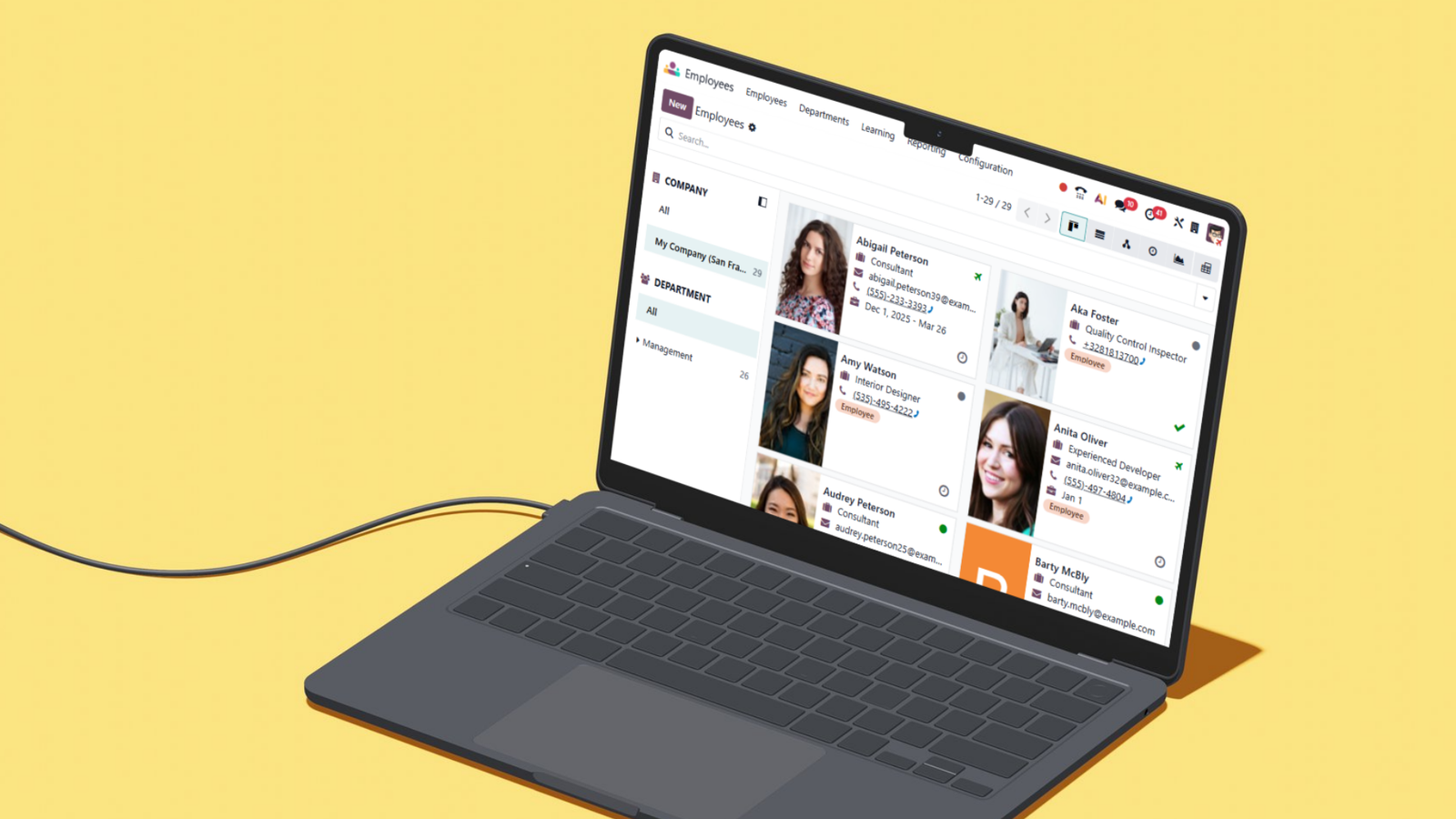
Not every payroll module is built the same way. When evaluating Odoo payroll for UAE operations, these are the features that actually move the needle for compliance and efficiency.
1. WPS-ready salary structures. Salary components must be configured to match the categories required for WPS file generation, including basic salary, housing, transport, and other allowances reported separately.
2. Automated gratuity calculations. End-of-service benefits in the UAE are based on tenure and last-drawn basic salary. A properly configured Odoo instance calculates this automatically and updates it as employment terms change.
3. Multi-company and multi-currency support. Groups running several trade licenses across the UAE, Saudi Arabia, or other GCC countries can consolidate payroll while still generating entity-specific reports.
4. Leave and attendance integration. Unpaid leave, overtime, and public holidays should automatically adjust payroll runs rather than requiring HR to manually recalculate each cycle.
5. Payslip and salary certificate generation. Employees should be able to self-serve payslips, salary certificates, and leave balances through an employee portal, reducing HR’s administrative load.
6. Bank file export for WPS submission. The system should generate the SIF (Salary Information File) format required by UAE banks and the Ministry of Human Resources and Emiratisation without manual reformatting.
7. Loan and deduction management. Employee loans, salary advances, and recurring deductions need to be tracked and automatically applied across future pay cycles until settled.
8. Contract and visa expiry alerts. HR teams need automated reminders for labor card renewals, visa expiries, and contract end dates tied directly to each employee record.
9. Real-time reporting for finance. Payroll costs should be visible to finance instantly, broken down by department, cost center, or project, rather than arriving as a lagging monthly summary.
WPS Compliance and UAE Labor Law
The Wage Protection System is mandatory for most private-sector employers in the UAE, and non-compliance carries real financial and legal risk, including fines and restrictions on issuing new work permits. According to the UAE Ministry of Human Resources and Emiratisation, employers must pay salaries within a specified window and report them through the WPS in the approved format.
A properly configured Odoo HR payroll software UAE deployment generates the required SIF file automatically as part of the normal payroll run, rather than requiring a separate manual export process. This significantly reduces the risk of late or incorrectly formatted submissions, which are among the most common reasons UAE companies face WPS penalties.
Beyond WPS, Odoo can be configured to reflect the specific gratuity, notice period, and leave entitlement rules set out in UAE labor law, and to differentiate between mainland Ministry of Human Resources and Emiratisation regulations and the rules of individual free zones such as DMCC, JAFZA, or DIFC.
Odoo HR Payroll vs Traditional Payroll Systems
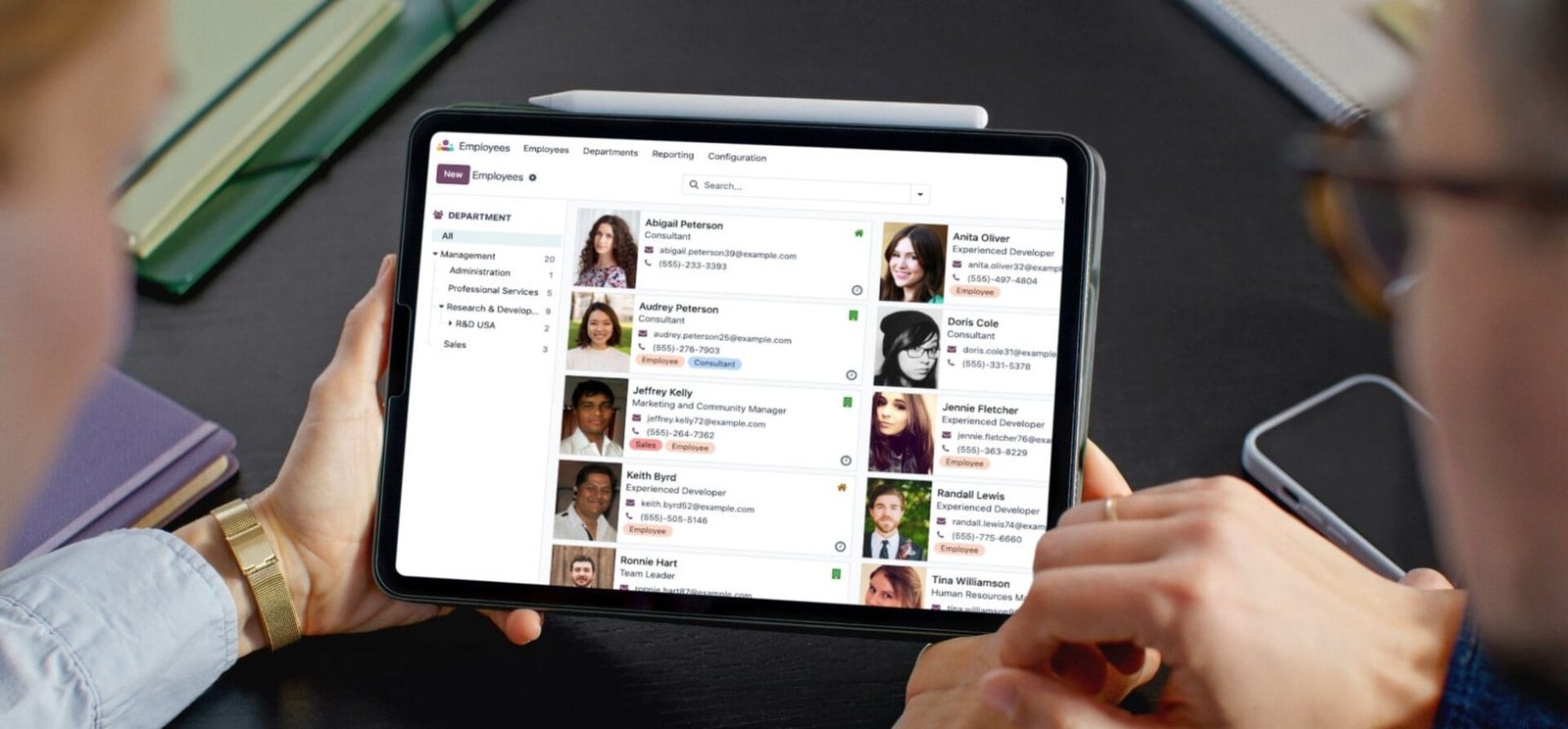
Many UAE businesses are migrating from standalone payroll tools or outsourced payroll bureaus to an integrated Odoo setup. The differences become clear once you compare how each approach actually functions day to day.
Data flow. Standalone payroll tools require manual export/import between HR, attendance, and accounting systems. Odoo HR payroll software UAE implementations push data automatically between modules, eliminating duplicate entry.
Cost over time. Outsourced payroll bureaus charge per employee per cycle indefinitely. An owned, configured Odoo system has an upfront implementation cost but no recurring per-payslip fees as the company scales.
Customization. Generic international payroll software often can’t handle UAE-specific WPS formatting or gratuity rules without expensive workarounds. Odoo, configured correctly for the region, handles these natively.
Visibility. With outsourced payroll, finance teams typically see summarized reports after the fact. With Odoo, payroll costs are visible in real time, broken down by department or project as soon as the run is confirmed.
Scalability. Adding a new entity, free zone license, or country of operation with a payroll bureau often means starting a new contract. In Odoo, it typically means adding a new company record within the same system.
How AppsGate Implements Odoo HR Payroll Software UAE-Wide
Implementing Odoo payroll is not a plug-and-play exercise, especially in a regulatory environment as specific as the UAE’s. AppsGate approaches every HR and payroll implementation with a structured methodology built around the realities of GCC compliance.
The process typically starts with a detailed review of the client’s current salary structures, allowances, and any existing payroll data that needs migrating. From there, AppsGate configures salary rules, WPS-ready components, and approval workflows specific to the client’s free zone or mainland setup.
Because payroll touches nearly every other part of the business, AppsGate also connects the payroll module to attendance, leave, recruitment, and general accounting so that data flows in one direction without manual re-entry. This is the same integration-first approach AppsGate applies across its Odoo consultancy work, whether the client is in real estate, education, retail, or manufacturing.
For businesses already using other Odoo modules, such as those exploring timesheet tracking, payroll integration is a natural next step, since employee hours logged in timesheets can feed directly into payroll calculations for project-based or hourly staff.
Phased Rollout: What to Expect
A well-run Odoo HR payroll implementation is rarely a single “big bang” go-live. Most successful UAE deployments follow a phased approach that reduces risk and gives HR teams time to adjust.
Phase 1: Discovery and configuration. The implementation partner maps existing salary structures, allowances, and compliance requirements, then configures the system to match. This phase typically includes setting up employee master data, contract types, and salary rules.
Phase 2: Parallel run. Before fully switching over, most companies run Odoo alongside their existing payroll process for one or two cycles. This allows HR to verify that calculations, deductions, and WPS files match expectations before the old system is retired.
Phase 3: Full go-live. Once parallel runs confirm accuracy, the company moves fully onto Odoo for payroll processing, WPS submission, and payslip generation. HR and finance teams receive training on running cycles independently.
Phase 4: Optimization. After go-live, most businesses continue refining automation, adding features like employee self-service portals, loan management workflows, or deeper integration with recruitment and performance modules.
Phase 5: Ongoing support. Regulatory requirements change, and payroll systems need periodic updates to salary rules, gratuity calculations, and reporting formats. Ongoing support ensures the system stays compliant as UAE labor law evolves.
This phased structure is particularly important for companies with large workforces or multiple entities, where a rushed rollout can create payroll errors that directly affect employee trust and compliance standing.
Frequently Asked Questions
Is Odoo payroll compliant with UAE labor law?
Odoo itself is a flexible platform, not a pre-packaged compliance product. Achieving compliance with UAE labor law, including WPS, gratuity, and leave rules, depends on how the system is configured during implementation, which is why working with an experienced local partner matters.
Can Odoo generate the WPS SIF file automatically?
Yes, when configured correctly, Odoo can generate the Salary Information File in the format required for WPS submission, removing the need for manual reformatting each payroll cycle.
How long does an Odoo HR payroll implementation take?
Timelines vary based on company size and complexity, but most UAE implementations move through discovery, configuration, and a parallel run phase before go-live, rather than switching over immediately.
Does Odoo payroll work for multi-entity or multi-free-zone companies?
Yes, Odoo supports multi-company configurations, allowing groups with different trade licenses or free zone registrations to manage payroll centrally while still generating entity-specific reports.
Can Odoo payroll integrate with attendance and timesheets?
Yes, leave, attendance, and timesheet data can feed directly into payroll calculations, which is especially useful for project-based, hourly, or shift